
Proposed Fisheries Closures in Tutūkākā & Ngunguru - Have Your Say
MPI Fisheries – Northland is seeking public feedback on a proposal to extend a temporary fisheries closure and net prohibition for a further two years in waters around Tutūkākā and Ngunguru.
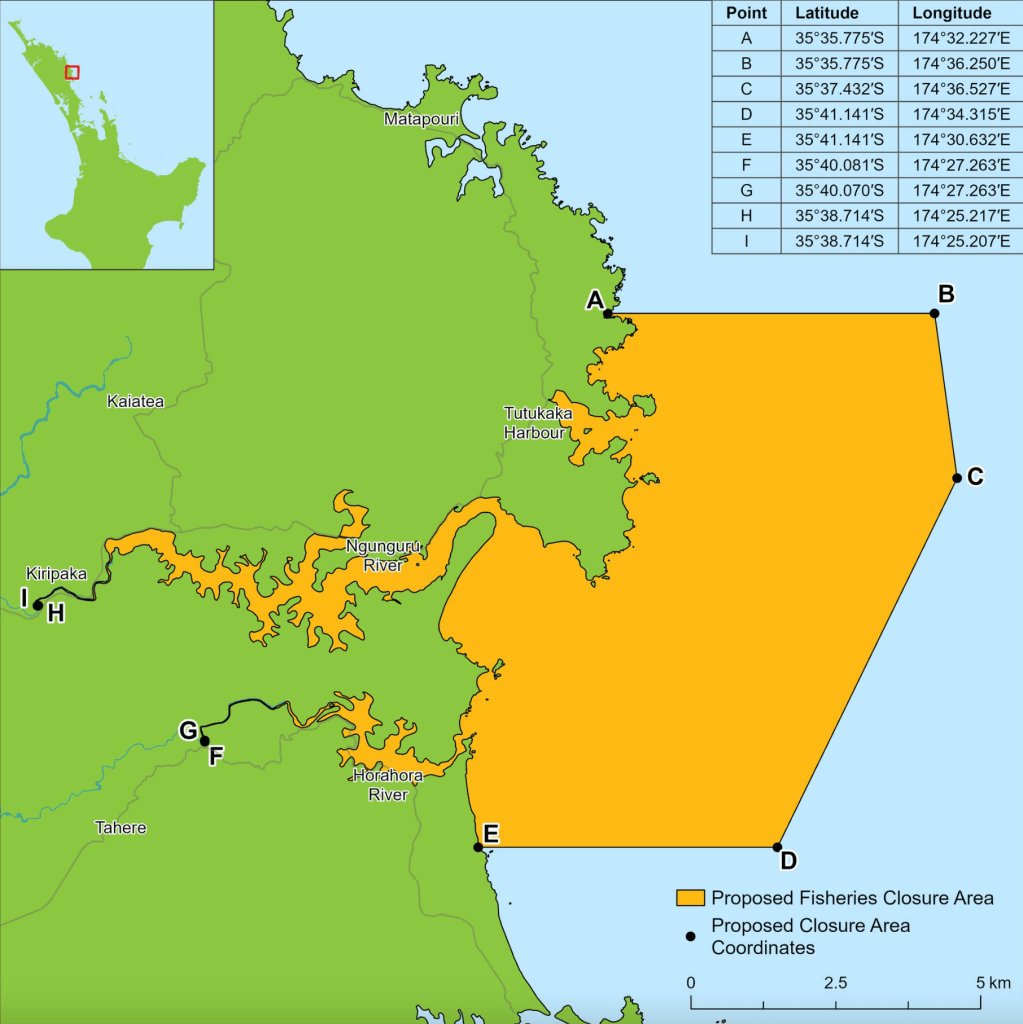
The proposal would restrict the taking of a wide range of species – including pāua, pipi, cockles, rock lobster, mussels, crabs and others – within fisheries waters between Middle Gable and Paparoa, extending 3 nautical miles offshore. A net prohibition is also proposed for Tutūkākā Harbour, the Ngunguru River, and the Horahora River (including estuaries).
Fisheries New Zealand says the consultation is intended to gather feedback from anyone who has an interest in the species involved or in how the area is used. While temporary closures are often proposed to help restore depleted species and protect sensitive habitats, they can also affect local food gathering, recreation, and long-standing coastal practices.
This consultation invites locals, whānau, fishers, and other coastal users to share how the proposal could affect the community and the future health of the coastline. It has already sparked strong local interest, with questions about how the closures would work in practice, who they would apply to, and whether clear, consistent rules will be enough to protect areas many say are already under pressure.
⏰ Submissions close at 5pm on Monday, 2 March 2026.
👉 Feedback must be submitted through the official consultation process – comments on this article do not count as submissions.
Coastlife exists to keep it local. Have a browse through the latest local news, support a nearby business, and stay connected to the coast.
Coastlife – our people, our place.


I support this closure
I do not support this
I do not support this ban
I do not support this closure
I do not support this ban
I do not support this closure
I’d be interested in why people don’t support the proposal- apart from wanting to fish wherever, of course! Are there other constructive proposals out there?
I do not support this closure
I support this closure, if a referendum is taken at the next local elections.
I do not support this closure
It doesn’t state what the other’s are….if this doesn’t affect fishing from the rocks for the kids and helps address the stripping of the countries shellfish and molluscs then I am all for it
I believe it is just for cray fish, shellfish, mullet, piper, etc etc not line fishing
Open the areas for fishing but with restrictions
I support the closure, let TANGAROA revive, so our kids can have a kai. Its about the furniture.
I strongly support the ban. I have skimmed through the benthic survey report and it’s obvious that there is a need for the ban. I think there needs to be more work on explaining to locals in plain English why the ban is needed and most importantly what it could achieve. The report is very well presented and compelling but until locals understand what has been lost and what could be achieved by appropriate management I fear there will not be strong support. I would like to see a report that shows what the impact of a long term ban could be, how it can enhance the overall fishery. The quote by from Philip Wellington a descendant from the first inhabitants of the Ngāti Taka Hapū area is very compelling, a must read for anyone prior to making their mind up whether to support the ban or not.
“I am the kaitiaki for Ngāti Taka rohe moana. I was the applicant for the Rohe Moana and the Whangai Mokopuna 186A Marine closure.
“The decline in kōura (crayfish) started in the sixties after the first kōura boom. Prior to this, kōura weren’t worth much and anyone could go out and catch them to order and sell them for pocket money. I did this myself. Then Hikurangi Fisheries secured a market in Japan and all of a sudden, the crays became valuable, the big kōura boom occurred at the Chatham Islands. Then when the boom was over most of the boats headed back to the mainland and became local crayfishermen. My father was a crayfisherman. He used a 14 foot plywood boat with a seagull outboard and he had 20 pots and he was able to make a living fishing between the second gable and Ngunguru point. At that time there were about five commercial boats craying out of Tutukaka. It wasn’t uncommon to pull up a pot and find a bottle of beer in it where someone had swapped it for a kōura.
“My memory of fishing with my father are seeing a pot come up with lots of kōura in it, a lot of them with barnacles on their shells indicating that they had long since reached maximum size and no longer needed to shed their shell. We used to set a lot of pots inside the Tutukaka Harbour when we knew it was going to be rough. There are places in the harbour in shallow water we could wade around at low tide and find a cray in a shallow hole. The kōura didn’t need to hide in those days because there was no-one chasing them, it was quite common to see juveniles in the rock pools up to one and two inches long, clear in colour like a shrimp. Personally, while I have done a small amount of tank diving but mainly I free dive, I know where all of the nurseries are along the coast near Tutukaka. The lack of juvenile kōura in these nurseries is serious in my view, a few of these nurseries probably will not recover, especially the ones inside the harbour.”(Figure 2)